November 23, 2026
Bond Prices and Duration: What Every Fixed-Income Investor Should Know
By @theinvestordesk
Why bond prices move
When you buy a bond, you lend money for a fixed period. In return you receive regular interest payments, called the coupon, and your principal back at maturity. That sounds straightforward, but the price you pay for a bond on the secondary market is not fixed. It changes as market interest rates shift, and the size of that change depends on two factors: how long you have to wait for your money and how big those coupon payments are.
The relationship is inverse. When prevailing rates rise, existing bonds with lower coupons fall in price. When rates fall, those same bonds become more valuable. The trick is to know how much a bond's price will change for a given move in rates. That is where duration comes in.
Duration: a measure of sensitivity
Duration is not a time period, although it is expressed in years. It is a number that estimates how much a bond's price will change when interest rates change by one percentage point. A bond with a duration of five years will, all else equal, see its price drop by roughly 5% for a 1% rise in rates. The same bond would gain about 5% if rates fell by 1%.
Several things affect a bond's duration. Longer maturities push duration higher because you must wait longer to receive your principal, making the bond more sensitive to rate changes. Lower coupon rates also increase duration, since smaller interest payments mean more of the bond's total return depends on the final repayment of principal. A zero-coupon bond, which pays no interest until maturity, has a duration equal to its term to maturity.
It is useful to think of duration as a risk gauge. A bond portfolio with an average duration of eight years is roughly twice as sensitive to interest-rate moves as a portfolio with a duration of four years. If you expect rates to rise, you might prefer shorter-duration bonds to reduce price volatility. If you expect rates to fall, longer-duration bonds amplify the price gain.
Maturity versus duration
Many investors confuse maturity with duration. Maturity is the date when the bond's principal is due. Duration is a weighted average of the present value of all future cash flows, including both coupon payments and the final principal. Two bonds with the same maturity can have different durations if their coupon rates differ.

Consider a 10-year bond with a 5% coupon and a 10-year zero-coupon bond. The coupon-paying bond has a duration lower than 10 years because the early interest payments reduce the average waiting time for your money. The zero-coupon bond has a duration of exactly 10 years. That means the zero is more sensitive to rate changes, even though both mature on the same date.
For a bond investor, knowing the duration of your holdings is more important than knowing the average maturity. Duration tells you how much your portfolio's value will swing when the Federal Reserve or the Reserve Bank of India adjusts its policy rate.
Other factors that affect bond prices
Duration is not the only factor. Credit quality matters. A bond rated below investment grade carries a higher risk of default, and its price will react to news about the issuer's financial health as well as to changes in interest rates. That is called credit spread risk. Two bonds with identical duration can behave very differently if one is a government bond and the other is a corporate bond with a weak balance sheet.
Yield also plays a role. The yield to maturity is the total return you can expect if you hold the bond until it matures, assuming all coupon payments are reinvested at the same rate. The bond's current yield, which is the annual coupon divided by the current price, gives a snapshot of income but ignores any capital gain or loss at maturity.
Inflation expectations can push yields higher, which pushes bond prices lower. If investors believe inflation will erode the purchasing power of future coupon payments, they demand a higher yield to compensate. That dynamic shows up most clearly in long-term bonds, which have more future cash flows exposed to inflation risk.
How to use duration in research
When you research a bond or a bond fund, the first number to look at after yield is duration. It tells you what kind of ride you are in for if rates move. A fund with a duration of seven years will have larger daily price swings than a fund with a duration of two years, even if both hold high-quality bonds.
Some investors use duration to match their liabilities. If you know you will need a certain amount of money in five years, you can buy bonds with a duration close to five years. That way, a change in interest rates will affect both the bond's price and the reinvestment rate in a roughly offsetting way. This is called immunization.
Other investors use duration to express a view on interest rates. If you think the central bank will cut rates, you increase the duration of your portfolio to capture larger price gains. If you think rates will rise, you shorten duration to protect capital.
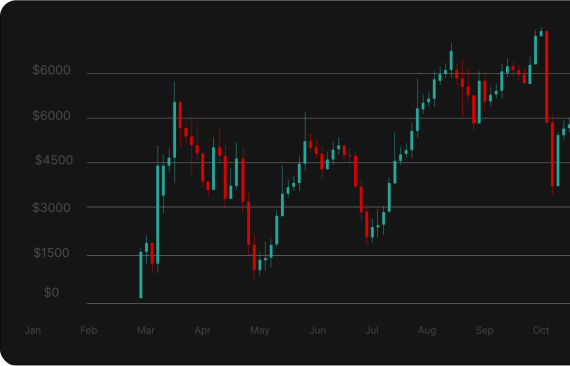
Platforms like Tickspike Markets provide tools to screen bonds by duration, yield, maturity, and credit quality. That allows you to find bonds that fit your interest-rate outlook and your income needs without manually calculating each bond's sensitivity.
What about bond funds and ETFs
Individual bonds have a fixed maturity and a known duration that declines over time. Bond funds and ETFs do not mature. Their duration stays roughly constant because the fund manager continuously buys and sells bonds to maintain the portfolio's target duration. That means a fund with a stated duration of five years will stay near five years, regardless of how long you hold it.
That is an important distinction. If you buy an individual bond and hold it to maturity, you know your final return as long as the issuer does not default. If you buy a bond fund, the return depends on the path of interest rates over your holding period. A fund's share price will fluctuate with rates, and the income distribution will change as the manager buys new bonds at different yields.
When comparing bond funds, look at the average duration and the average credit quality. A fund with a higher duration will be more volatile. A fund with lower credit quality will offer a higher yield but carries default risk. The combination of duration and credit quality gives you a good sense of the fund's risk profile.
Practical steps for bond research
Start by clarifying your objective. Are you looking for steady income, capital preservation, or a mix of both? If you need predictable cash flows, individual bonds held to maturity might suit you. If you want diversification and professional management, a bond ETF or mutual fund may be a better fit.
Next, assess the interest-rate environment. If rates are historically low and expected to rise, short-duration bonds reduce the risk of capital loss. If rates are high and expected to fall, longer-duration bonds lock in higher yields and offer price appreciation.
Then look at credit quality. Government bonds from stable economies have minimal default risk but lower yields. Corporate bonds, especially those rated below investment grade, offer higher yields but carry a real risk of loss. Research the issuer's financials, debt levels, and earnings stability.
Finally, use a screening tool to narrow the universe. A platform such as Tickspike Markets lets you filter bonds by yield range, duration bucket, maturity range, and credit rating. That saves time and helps you compare bonds side by side.
Tickspike Markets is also on YouTube.
Bond research tools are not a substitute for understanding the fundamentals, but they make the process faster and more systematic. Once you know what duration means and how it interacts with yield and credit quality, you can make informed decisions about which bonds to buy, when to buy them, and how to position your portfolio for the rate environment ahead.
For more information on bond research and portfolio tools, you can contact Tickspike Markets at 44/89 RAMANIKA, Thirupurakkal Colony, Melamuri, Palakkad, Keralam 678012, India, or call +91-7411498895.
❧